Your Creek Needs You: A Hands-On Guide to DIY Stream Restoration on a Shoestring Budget
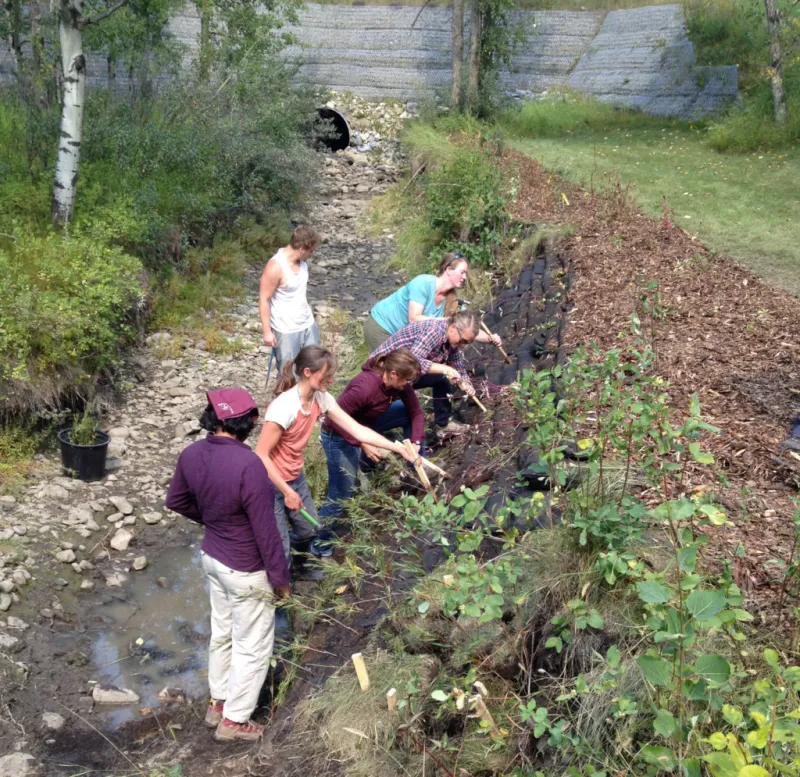
Photo: volunteer anglers planting native vegetation along stream bank restoration, via waterportal.ca
Most anglers have stood at the edge of a beat-up stretch of water and felt that familiar frustration — a creek that used to hold trout choked with sediment, a bass pond with a crumbling, bare bank, a local stream that runs orange after every rainstorm. And most of us have had the same thought: somebody should do something about this.
Here's the thing. That somebody is probably you.
You don't need a federal restoration contract or a six-figure nonprofit budget to improve fish habitat at the local level. Across the country, individual anglers and small fishing clubs are quietly doing meaningful work — planting native shrubs along eroded banks, pulling invasive species, building simple in-stream structures — and seeing real results in the fisheries they care about. This guide is your entry point.
Why Small-Scale Restoration Actually Matters
Large-scale habitat restoration projects get most of the press, and they deserve it — dam removals, whole-watershed replanting efforts, and major sediment remediation projects can transform fisheries at a regional level. But they're slow, expensive, and dependent on funding cycles and political will.
Small-scale, angler-led projects fill a critical gap. They address localized problems quickly, they build community investment in habitat health, and they create visible, measurable improvements that generate momentum for bigger efforts down the road.
A 2021 study published in the North American Journal of Fisheries Management found that targeted riparian plantings on degraded stream banks — even on stretches as short as 200 feet — showed measurable improvements in water temperature, bank stability, and macroinvertebrate diversity within two to three growing seasons. That's the kind of turnaround a motivated angler can actually see.
Step One: Know What You're Working With
Before you buy a single plant or move a single rock, spend time observing the stretch of water you want to improve. Walk it in different seasons if you can. Look for:
- Exposed, bare banks with no vegetation — a major source of sediment and a sign of active erosion
- Invasive plant species like Japanese knotweed, reed canary grass, or multiflora rose crowding out natives
- Lack of shade leading to elevated water temperatures (critical for trout and other cold-water species)
- Debris jams blocking fish passage or creating unsafe flood conditions
- In-stream habitat gaps — long stretches of uniform depth with no pools, riffles, or cover structure
Take photos, take notes, and if possible, talk to your state fish and wildlife agency's regional biologist. Many state agencies — including those in Pennsylvania, Colorado, Oregon, and Michigan — offer free habitat assessment consultations for private landowners and community groups. They can also flag any permitting requirements before you start moving things around.
The Permitting Reality (Don't Skip This)
Let's be direct: working in or immediately adjacent to a waterway often requires a permit, and the rules vary significantly by state and even by county. Most in-stream work — placing rocks, logs, or any structure that could affect water flow — will require at minimum a notification to your state environmental agency and potentially a Section 404 permit from the Army Corps of Engineers if you're affecting "waters of the United States."
Riparian planting (working on the bank above the ordinary high-water mark) is generally less regulated, but it's still worth a quick call to your state's department of natural resources or environmental quality before you start.
The good news: many states have streamlined permit processes specifically for small-scale habitat restoration, and some have volunteer programs that essentially provide regulatory cover when you're working as part of an organized effort. Organizations like Trout Unlimited and American Rivers have local chapters that can help you navigate this and sometimes partner on projects that already have permits in place.
Project 1: Riparian Planting — Your Highest-Impact, Lowest-Cost Option
What it does: Stabilizes banks, reduces erosion and sediment load, provides shade to lower water temperatures, and creates terrestrial insect habitat that feeds fish.
What it costs: $100–$500 for a 100-foot stretch, depending on plant sources.
How to do it:
- Identify the bare or invasive-dominated bank sections you want to target.
- Source native plants from your state's native plant nursery, a conservation district plant sale, or a local native plant society. Conservation district sales often offer bare-root native shrubs and trees for $1–$5 per plant — a fraction of nursery prices.
- Good species to prioritize (varies by region): willows, alders, buttonbush, elderberry, dogwoods, and native sedges. These establish quickly near water and have deep, stabilizing root systems.
- Plant in early spring or fall when soil moisture is higher and plants aren't heat-stressed.
- Use a simple tree tube or chicken wire cage around each plant to protect from deer browse in the first year or two.
Dave Kowalski, a trout angler and landowner in central Pennsylvania, planted 180 native shrubs along 300 feet of a degraded limestone creek on his property over two weekends in 2019. "By 2022, that bank was completely transformed. The water temperature in that stretch dropped almost four degrees in summer, and I started seeing wild brown trout holding in spots I hadn't seen fish in years."
Project 2: Bank Stabilization With Natural Materials
What it does: Stops active erosion on undercut or slumping banks using biodegradable materials and live plant stakes.
What it costs: $150–$400 depending on the length of bank and materials.
How to do it:
For moderately eroding banks, live stake installation is one of the most effective and affordable techniques available. Cut dormant willow or dogwood stems (12–18 inches long, pencil-thick) from existing shrubs in late winter, and drive them directly into the moist bank soil at a slight downward angle, spaced 12–18 inches apart. Most will root within weeks and establish a living root mat that locks the bank in place.
For more severely eroding banks, combine live stakes with coir fiber rolls (biodegradable coconut fiber tubes, available at erosion control suppliers for $15–$30 each). Stake the rolls at the water's edge, backfill behind them with soil, and plant live stakes through the rolls and into the bank. The rolls hold the bank while the plants establish, then break down naturally over two to three years.
Project 3: Strategic Debris and Invasive Removal
What it does: Improves fish passage, reduces flood risk, and removes competition so native vegetation can recover.
What it costs: Mostly labor. Budget $0–$100 for tools and disposal if needed.
How to do it:
Organize a work party. Seriously — this is the kind of project that moves fast with eight people and a pair of loppers. Focus on:
- Removing invasive shrubs and vines (Japanese knotweed, buckthorn, multiflora rose) by cutting at the base and applying a small amount of herbicide to the cut stem. Check your state's guidelines on approved herbicides near water.
- Clearing debris jams that block fish passage — but leave single large logs in place, since those create valuable pool habitat.
- Opening up canopy gaps in over-shaded stretches where native understory plants can't establish.
Document everything before and after. Photos, GPS coordinates, species lists. This data is genuinely useful to your state wildlife agency and can help you qualify for future grant funding if you want to scale up.
Connecting Your Work to Better Fishing
Every one of these projects has a direct line to improved angling. Cooler, cleaner water holds more fish. Stable banks reduce the silt that smothers spawning gravel. Native shrubs drop insects into the water column. Restored pools and riffles create the habitat complexity that concentrates fish and makes for better, more interesting fishing.
This is the core idea behind everything we do at Fish Habit Outfitters: protecting habitat isn't separate from fishing — it is fishing. The angler who plants willows along a degraded creek isn't sacrificing their time for some abstract environmental goal. They're investing in the fishery they're going to be fishing for the next twenty years.
You don't need a grant. You don't need a nonprofit. You need a pair of rubber boots, a Saturday morning, and a stretch of water worth fighting for.