Reel Rituals: The Science Behind Why Fishing Becomes a Way of Life
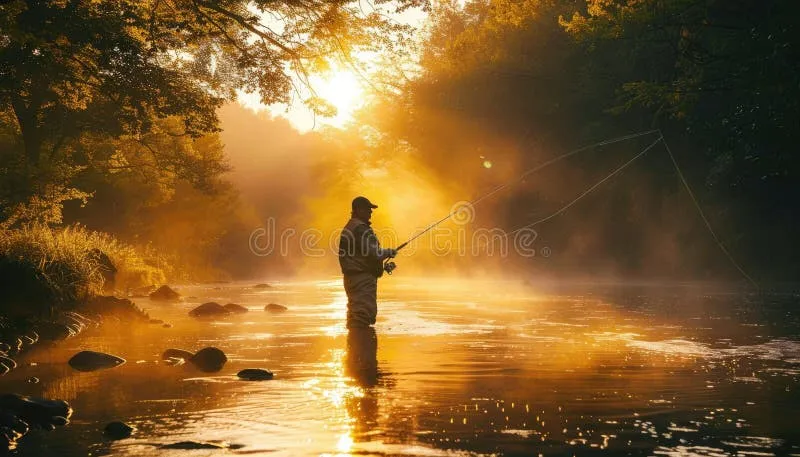
Photo: angler morning ritual fly fishing river sunrise quiet, via thumbs.dreamstime.com
Somewhere between the first time you tied on a hook as a kid and the hundredth time you backed your truck down a boat ramp before sunrise, something shifted. Fishing stopped being something you do and became something you are. That's not poetic license — that's neuroscience.
At Fish Habit Outfitters, the word "habit" isn't just in our name. It's the whole philosophy. And it turns out that understanding why we fish — really understanding it — might be the most important step toward fishing better, more responsibly, and for longer.
What Your Brain Is Actually Doing on the Water
Habit researchers describe a three-part cycle: cue, routine, reward. The cue is the trigger — a season change, a Saturday alarm, the smell of rain on warm asphalt. The routine is the behavior itself. The reward is what your brain gets out of it, and it's what makes the loop self-reinforcing.
For anglers, this loop runs deep. Dr. Ann Graybiel, a neuroscientist at MIT who has studied habit formation for decades, describes how repeated behaviors gradually shift from conscious decision-making into automatic sequences stored in the basal ganglia — the brain's habit center. Once a behavior is "chunked" into a habit, it requires less mental effort and becomes almost automatic.
That's why experienced anglers can rig a line in the dark, read a current seam without thinking, or sense a subtle bite through muscle memory alone. The water doesn't just feel familiar — neurologically, it is familiar. Your brain has mapped it.
The Ritual Is the Point
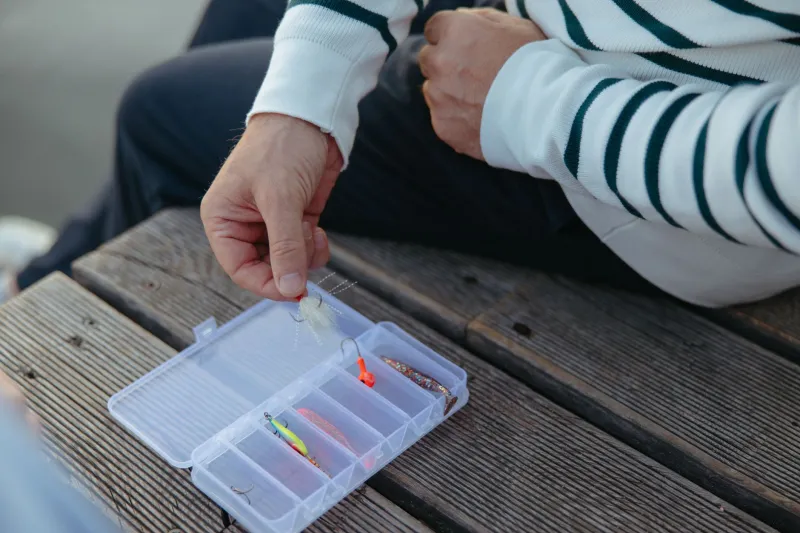
Ask any serious angler about their pre-trip routine and you'll hear something that sounds almost ceremonial. For Marcus T., a fly fisherman based in Colorado who's been working the South Platte River for 22 years, it goes like this: coffee at 4:45 a.m., 20 minutes of tying the night before, a specific playlist for the drive, and a moment of quiet at the water before the first cast.
"I used to think the routine was just practical," he says. "Get your gear ready, drive to the spot, fish. But somewhere along the line I realized the routine was the experience. The anticipation is part of the catch."
This tracks with psychological research on what's called "pre-performance ritual" — structured, repetitive behaviors that help people enter focused mental states. Athletes use them. Musicians use them. And anglers, it turns out, have been using them intuitively for generations.
The ritual also creates connection — to place, to season, to other people. For Denise R., a bass angler from Georgia who fishes with her teenage daughter every spring, the habit loop is explicitly relational. "We go to the same lake every April. Same spot. It's not even about the fish anymore — it's about the fact that we keep showing up. That matters to both of us."
When Habits Harm — and How to Redirect Them
Here's the part that's worth sitting with: not all fishing habits are good ones. The same automaticity that makes an experienced angler efficient can also make them careless. Fishing the same overpressured spot because it's familiar. Defaulting to live bait in a catch-and-release waterway. Leaving a monofilament tangle in the reeds because cleanup wasn't part of the original habit loop.
Habit researcher Charles Duhigg, author of The Power of Habit, argues that the most effective way to change a problematic habit isn't to eliminate it — it's to keep the cue and the reward but swap in a new routine. For anglers, that's good news. You don't have to stop fishing your favorite spot. You just have to add something: pick up trash on the way out. Check your local stocking reports and target undervisited waters once a month. Practice proper fish-handling every single time, not just when someone's watching.
Small additions to existing routines are dramatically more likely to stick than brand-new resolutions. That's not opinion — that's what the behavioral science says.
Building a Practice That Protects What It Loves
So how do you deliberately build a fishing habit that makes you a better angler and a better steward? A few practical starting points:
Attach conservation to your cue. If your routine starts with rigging up, add one conservation check to that moment — look up current fish advisories, verify your license is current, or check if there are any active habitat restoration volunteer days near your spot.
Make the reward visible. One reason environmental habits are hard to maintain is that the reward is diffuse and distant. Counter that by keeping a fishing journal that tracks not just what you caught, but water conditions, species health observations, and any habitat changes you notice over time. Watching that log grow is its own reward loop.
Find your crew. Social habits are the stickiest. Anglers who fish regularly with conservation-minded friends adopt better practices faster and maintain them longer. It's not peer pressure — it's shared identity. When the people you fish with release carefully and pick up what they find, that becomes what fishing means in your habit loop.
Let the seasons teach you. One of the most powerful cues in an angler's life is the calendar. Use seasonal transitions as reset points — spring is a great time to audit your gear for sustainability, fall is perfect for volunteering with local stream cleanup crews before winter sets in.
The Habit Is the Legacy
Fishing habits, once formed, are remarkably durable. They survive job changes, moves, the chaos of raising kids, and the slower pace of retirement. They get passed down — not just through explicit teaching, but through the simple act of showing up together, season after season, at the same stretch of water.
That's the quiet power in what we do here at Fish Habit Outfitters. Every piece of gear we carry, every guide we publish, every community conversation we host — it's all in service of that loop. Cue: the pull of the water. Routine: the cast, the wait, the release. Reward: something bigger than the fish.
Build the habit right, and the water will still be there for whoever comes next.