Show Up, Season After Season: How Consistent Anglers Quietly Heal Their Home Waters
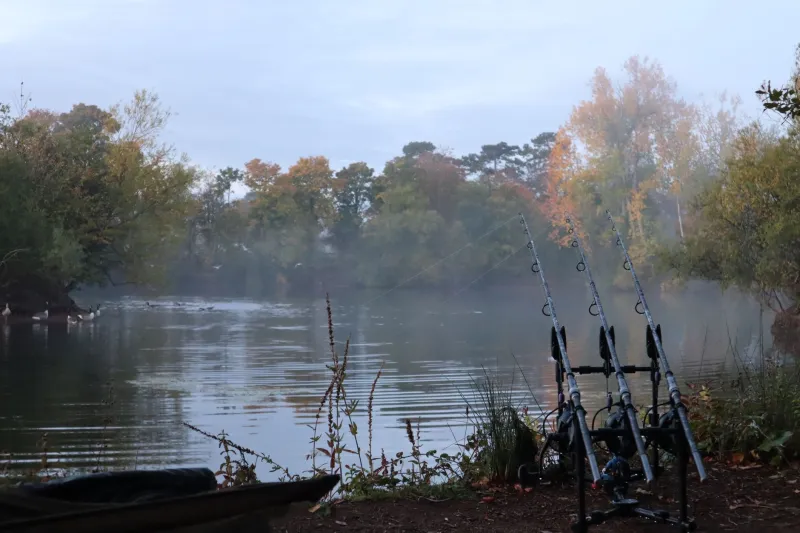
Most anglers can point to a specific spot—a bend in a creek, a weedy cove on a reservoir, a tidal flat they've waded since high school—and tell you exactly how it's changed. The water clarity, the bug hatches, the size of the fish. That kind of ground-level knowledge doesn't come from a monitoring report. It comes from showing up, over and over, across seasons and years.
That consistency isn't just good for your casting arm. It turns out, habitual anglers are among the most valuable environmental assets a watershed can have. The trick is building the kind of practice that sticks—and understanding why it matters when you do.
The Psychology of the Fishing Habit
Behavioral researchers have spent decades studying habit formation, and the core finding is deceptively simple: habits stick when they're tied to a reliable cue, a routine, and a reward. For anglers, the cue might be the first cold snap of October, the smell of spring runoff, or the way the light shifts in early June. The routine is the trip itself. The reward? That's almost too obvious to explain to anyone who's spent a morning on good water.
But here's the part that often gets overlooked: repeated behavior in a specific environment creates what psychologists call place attachment—a genuine emotional bond with a location. Once that bond forms, you stop being a visitor and start being a steward. You notice when the aquatic vegetation looks off. You clock the absence of a hatch that used to be reliable. You pick up a piece of trash without thinking about it because the place feels like yours, in the best sense of the word.
That psychological shift is exactly what watershed health needs more of.
Small Visits, Big Data
Here's something most anglers don't realize: your regular presence on the water generates genuinely useful ecological data, even if you're not formally tracking anything.
State fish and wildlife agencies across the country increasingly rely on citizen science contributions to fill gaps in their monitoring programs. Platforms like iNaturalist, the Stream Tracker program in several Midwestern states, and the American Fly Fishing Trade Association's habitat reporting tools let everyday anglers log observations—water temperature, fish behavior, invasive species sightings, riparian conditions—that feed directly into management decisions.
When you fish the same stretch of the Driftless Area in Wisconsin every April, or wade the same coastal Georgia tidal creek every September, you accumulate a mental baseline that's hard to replicate with quarterly sampling. The data you carry in your head has real value. Getting it out of your head and into a reporting system turns a personal habit into a community resource.
Even informal documentation helps. Keep a simple fishing journal—waterproof notebooks are cheap—and jot down water conditions, species observed, and anything unusual. A few years of those notes and you're sitting on a localized ecological record that no state agency could afford to generate on their own.
Building the Seasonal Framework
A year-round fishing practice doesn't mean fishing every single day. It means intentionally distributing your time on the water across the calendar in a way that keeps you engaged with your home ecosystem through its full cycle.
Here's a loose framework that works for most of the continental US:
Winter (December–February): Slow down and go deep—both literally and figuratively. Winter fishing is often overlooked, but it's one of the best times to observe water quality conditions, assess riparian vegetation, and notice storm drain impacts without the distraction of heavy hatches or feeding frenzies. Target cold-tolerant species like trout and walleye, and use the quieter trips to scout habitat you want to understand better when things heat up.
Spring (March–May): This is your highest-impact season for observation. Spawning runs, insect emergence, migratory waterfowl—spring is when the watershed is most alive and most vulnerable. Fish it consistently, and pay close attention to turbidity, runoff patterns, and bank erosion. If you're going to report anything to a citizen science platform, spring gives you the most to work with.
Summer (June–August): Heat and pressure make summer fishing genuinely challenging in many parts of the country, and that's actually useful information. Documenting where fish are stacking up during thermal stress—deep pools, spring-fed tributaries, shaded runs—gives you insight into what your watershed's critical refuge habitat looks like. That knowledge has direct conservation implications.
Fall (September–November): Pre-spawn staging, baitfish migrations, and cooling water temperatures make fall the season that often hooks people for life. It's also when many anglers do their most reflective fishing—thinking about the year, the changes they've noticed, what they want to do differently. Use that energy. Connect with a local watershed council or Trout Unlimited chapter and share what you've been observing all year.
The Ripple Effect of Regular Presence
There's a community dimension to consistent fishing that doesn't get talked about enough. When you're a recognizable face on a stretch of water—when the locals know your truck, when other anglers nod at you on the bank—you become part of an informal monitoring network. You hear about the upstream chemical spill before it hits the news. You find out about the proposed culvert replacement project that needs public comment. You meet the landowner who's been thinking about fencing cattle out of the creek but didn't know anyone cared.
Those connections happen because you showed up. Repeatedly. Without an agenda beyond fishing.
In a culture that tends to celebrate the epic trip—the remote Alaskan lodge, the permit on the flats, the steelhead run that costs a week of PTO—there's something genuinely countercultural about choosing to become deeply acquainted with ordinary local water. But the conservation math is hard to argue with. A hundred anglers who fish the same county watershed fifty times a year generate more ecological awareness, more political will, and more on-the-ground stewardship than a thousand anglers who visit once.
Committing to Your Water
If you're reading this and thinking about a specific place—that stretch of river, that lake you grew up on, that little urban creek you keep driving past—trust that instinct. Start there.
Fish it in January when nobody else is out. Fish it in the August doldrums when the bass are sulking in the shade. Bring a notebook. Download a citizen science app. Tell a friend about it. Let the place become part of your identity, because that's when the real work begins.
The waters that are thriving in twenty years will be the ones that had people paying attention to them right now. Consistent, curious, season-after-season attention.
That's the habit worth building.