Before the First Cast: Building a Pre-Fish Ritual That Changes Everything
Most of us have been there. You drive forty-five minutes to your favorite stretch of river, step out of the truck, reach for your rod—and realize the reel you meant to respool is still sitting on your workbench at home. Or you show up mentally scattered, distracted by whatever happened at work, and spend the first hour just going through the motions. You're at the water, but you're not really there.
The anglers who consistently out-fish everyone else on the same water aren't always using better lures or casting farther. A lot of them just show up differently. They've built what behavioral psychologists call a habit stack—a sequence of small, intentional actions chained together that prime both their mind and their gear before the first cast ever happens.
This isn't about being obsessive or turning fishing into a chore. It's about building a ritual that actually makes you more present, more effective, and honestly, more connected to why you started fishing in the first place.
What Is Habit Stacking, and Why Does It Work for Anglers?
Habit stacking is a concept popularized by behavioral researchers and productivity writers, but the core idea is dead simple: attach a new behavior to an existing one. You already brush your teeth every morning. So if you want to build a stretching habit, you do it right after brushing. The existing behavior becomes the trigger.
For anglers, the same logic applies. You already pack your cooler the night before a trip. So you check your line weight right after you do. You already set your alarm. So you spend five minutes reviewing the local fishing report right before you go to sleep. Each action triggers the next, and over time the whole sequence becomes automatic—a ritual that runs on its own.
The psychological payoff is real. Research on pre-performance routines in sports consistently shows that structured rituals reduce decision fatigue, lower anxiety, and improve focus. Golfers, pitchers, basketball players—they all use them. There's no reason anglers shouldn't.
The Night-Before Stack: Gear That's Ready So Your Brain Doesn't Have To Be
The most impactful part of any pre-fish ritual happens the evening before you hit the water. This is when your future self will thank your present self most.
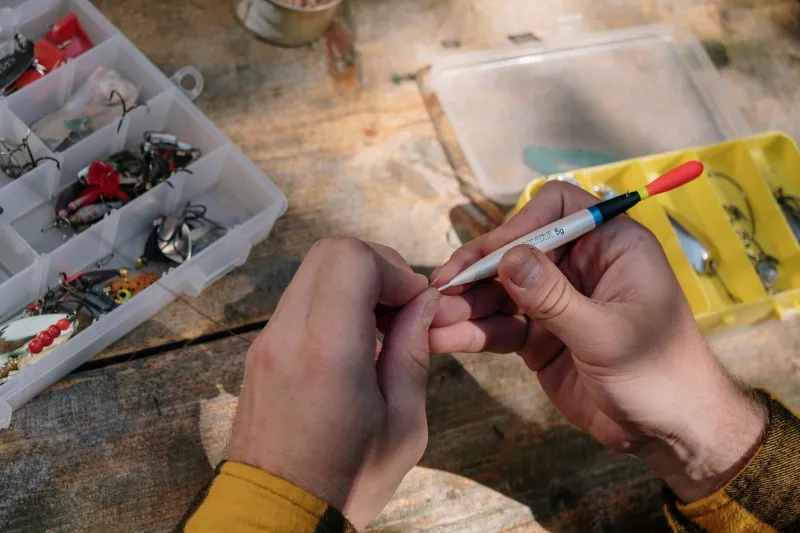
Start with a gear audit. Pull out your tackle bag and rod setup and physically run through what you're planning to use. Check your line for nicks, frays, or memory coils from sitting on a spool too long. Respool if needed—don't tell yourself you'll remember to do it in the morning. Inspect your hooks for rust or dull points. Sharpen or replace as needed. It takes twenty minutes and saves you the gut-punch of losing a good fish to a hook that was already half-dead.
Next, set your kit at the door. Waders, boots, license, net, polarized glasses, sunscreen, snacks—lay it all out. This sounds almost embarrassingly basic, but it eliminates the frantic morning scramble that leaves most anglers rushing to the water already stressed out.
Finally, do a quick habitat check. Pull up your state's fish and wildlife agency site or a trusted local fishing report. Check water temps, flow levels if you're fishing moving water, any recent stocking activity, or posted advisories. This isn't just practical—it connects you to the living system you're about to interact with. You start thinking about the fish as real animals in a real environment, not just targets. That shift in mindset matters.
The Morning Stack: Presence Over Speed
Morning rituals for fishing trips tend to be rushed. Coffee, keys, go. But even five extra minutes of intentional behavior before you leave the driveway can change the entire tone of your outing.
If you drink coffee in the morning, use that window to visualize the water. Not in a mystical way—just close your eyes for a minute and picture where you're heading. Think about the structure: the seam where fast water meets slow, the shaded bank, the drop-off you found last fall. You're essentially doing a mental warm-up, the same way an athlete might mentally rehearse before a competition. Your brain starts problem-solving before your boots hit the ground.
In the car, resist the urge to fill the drive with podcasts or phone calls if you can. Some of the best pre-fish mental prep happens in silence or with low-key music. Let your mind settle. You're transitioning from your regular life into something slower and more attentive. That transition is worth protecting.
When you arrive, slow down the setup. Don't rush to rig up and get your line in the water as fast as possible. Take a few minutes to observe before you do anything. Watch the surface for rises. Notice where birds are working. Check the banks for tracks or disturbance. You're gathering real-time intel, but you're also doing something more important—you're practicing the kind of attention that makes you a better angler and a more aware steward of the habitat around you.
The Conservation Layer: Why Your Ritual Is Bigger Than You
Here's where the habit stack becomes something more than just performance optimization. When you build intentional pre-fish rituals, you naturally start incorporating conservation behaviors—not as obligations, but as part of the rhythm.
Checking regulations the night before means you're less likely to accidentally keep a fish that's out of season or over the slot limit. Inspecting your gear for aquatic invasive species (AIS) before you leave one water body and before you enter another becomes part of your kit check, not an afterthought. Carrying a small trash bag to pick up what you find along the bank stops being a burden when it's already in the bag you packed the night before.
These aren't big gestures. But they compound. An angler who runs a deliberate pre-fish ritual fifty times a year is making fifty intentional conservation decisions that a distracted, disorganized angler might skip entirely. Over seasons and years, that adds up to real impact—on the water, on the fish, and on the culture of the places you fish.
Building Your Own Stack
There's no single right ritual. A fly fisherman targeting wild brook trout in the Appalachians has different needs than a bass angler running a boat on a Tennessee reservoir. The specifics are yours to figure out.
But the structure is transferable. Pick three to five anchor behaviors you already do before a fishing trip. Then attach one small intentional action to each. Write it down the first few times. Run through it before your next outing and notice what feels off or incomplete. Adjust. After a handful of trips, it stops feeling like a checklist and starts feeling like yours.
That's the whole game. Not perfection. Not gear obsession. Just showing up to the water a little more ready—mind clear, kit dialed, and genuinely present for whatever the day decides to offer.
The fish will notice. And honestly, so will you.