Same Bend, Every Season: The Deep Psychology of Why Anglers Never Leave Their Favorite Water
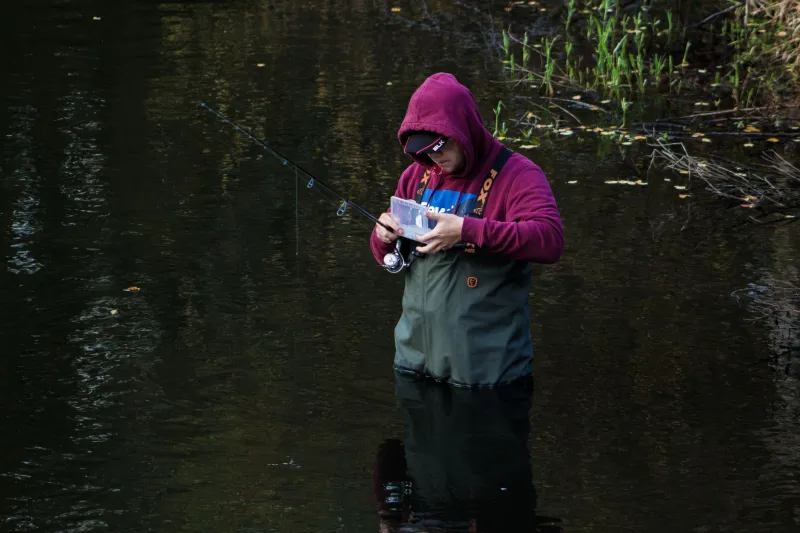
There's a gravel bar in western North Carolina that a guy named Dale has fished every October for 31 years. He can walk it in the dark. He knows which rock to step on, which eddy holds the brown trout in the third week of the month, and which upstream pool goes cold first when the leaves drop. He's caught bigger fish elsewhere. He knows that. But every fall, Dale is right back at that same bend.
"I don't really know how to explain it," he said. "It just feels like where I'm supposed to be."
Dale isn't unique. Ask almost any long-term angler about their relationship with a specific piece of water and you'll hear some version of the same thing — a pull that goes beyond logic, beyond fish counts, beyond anything that shows up on a map. It's one of the most interesting phenomena in all of outdoor recreation, and researchers who study behavior, memory, and neuroscience are starting to build a pretty compelling case for what's actually happening.
The Brain's Shorthand for "This Worked Before"
At the core of fishing site loyalty is something neurologists call procedural memory — the brain's way of encoding repeated physical actions into automatic, low-effort routines. It's the same system that lets you drive a familiar route without consciously thinking about each turn. When you've fished the same water dozens of times, your nervous system has already mapped it. Wading depth, current speed, casting angles, the feel of the bottom — all of it gets filed away in a part of the brain that operates below conscious decision-making.
This is deeply efficient. When you arrive at a familiar stretch, you're not burning cognitive energy figuring out the water. You're fishing it. That freed-up mental bandwidth makes the experience feel easier, more fluid, and often more enjoyable — even if the bite is slow. The water becomes a kind of home turf for your nervous system.
And then there's dopamine. Every time you've caught a fish at a particular spot, your brain tagged that location with a reward signal. Over time, even approaching that water triggers a low-level anticipatory release — a neurochemical whisper that says something good happens here. You're not just returning to a fishing hole. You're returning to a place your brain has literally been trained to associate with reward.
Seasonal Rhythms and the Ritual of Return
Fishing isn't a year-round constant for most anglers — it moves in seasons, and those seasons create powerful temporal anchors. The October brown trout run. The April crappie spawn. The first bass of Memorial Day weekend. These recurring events become emotional milestones, and the places where they happen accumulate meaning the way old photographs do.
Dr. Susan Clayton, an environmental psychologist at the College of Wooster who has studied human relationships with natural places, has written about how repeated interactions with specific environments create what she calls "place identity" — the way a location becomes woven into a person's sense of who they are. For anglers, this process is supercharged by the physical and sensory intensity of the experience. You're not just visiting a place. You're wading in it, smelling it, listening to it, feeling it through your rod hand.
That kind of full-body engagement encodes memory differently than passive observation. It's sticky. And it compounds across years until the place isn't just somewhere you fish — it's somewhere you are.
What the Fish Are Actually Doing (While You're Being Nostalgic)
Here's where things get interesting from a conservation standpoint: the fish populations at your favorite hole are not static. They shift, respond to pressure, move with habitat changes, and sometimes collapse entirely — while the angler's behavioral loyalty to that spot remains locked in.
Habitat data from state fish and wildlife agencies across the Southeast and Midwest consistently shows that angling pressure concentrates heavily on historically productive water, even when population surveys indicate those areas have declined. Meanwhile, adjacent stretches — sometimes with stronger fish counts — receive a fraction of the fishing pressure simply because they lack the same angler history.
This creates a feedback loop that works against both the angler and the fishery. Loyal anglers keep hammering familiar water. That water gets pressured. Fish populations thin or shift. But because the angler's attachment is emotional and procedural rather than purely data-driven, they often keep coming back anyway — interpreting slow days as part of the natural rhythm rather than a signal that something has changed.
"People want to believe the water is still what it was," said one fisheries biologist with the Tennessee Wildlife Resources Agency who has spent two decades doing stream surveys. "And sometimes it is. But sometimes the population has moved or crashed, and the angler is just fishing memory."
Breaking the Loop — And Why You Probably Won't
Here's the honest truth: knowing all of this probably won't make you leave your favorite water. And that's not necessarily a failure of willpower or rationality. Behavioral psychologists who study habit formation are pretty clear that procedural and emotional loops are among the hardest patterns to consciously override — especially when the activity itself is rewarding even without optimal outcomes.
The more productive question isn't how do I break the habit but how do I make the habit work better for the water I love?
Conservation organizations are starting to recognize that angler site loyalty, properly channeled, is one of the most powerful forces in fisheries management. An angler who has fished the same creek for 30 years is an informal monitoring station. They notice when the water drops in clarity, when the hatch timing shifts, when the bass stop holding in the usual spots. That observational data — if it can be captured and reported — is enormously valuable.
Programs like Stream Watch through American Rivers and various state-level citizen science initiatives are built partly around this insight. The angler who keeps going back to the same bend is exactly the person most likely to notice early signs of habitat degradation — and most motivated to do something about it.
The Loyalty Worth Leaning Into
Dale, back on his North Carolina gravel bar, has been reporting water temperature and clarity data to his state's trout monitoring program for the last six years. He still can't fully explain why he keeps coming back to that particular stretch. But he's started to think of it less as a habit and more as a relationship — one that comes with real responsibilities.
"If I'm going to keep showing up," he said, "I might as well pay attention."
That's the thing about the habit loop. It doesn't have to be a trap. The same psychological machinery that keeps you returning to your favorite water — the procedural memory, the dopamine conditioning, the place identity — can be redirected toward stewardship. The angler who can't stop going back is already halfway to being a conservation asset.
They just need to know what they're looking at when they get there.