From Weekend Caster to Watershed Keeper: The Skills Every Serious Angler Should Own
Most of us started fishing the same way. Someone handed us a rod, pointed at the water, and said go. We learned to cast, learned to read current seams, figured out what the bass were hitting in late summer. That's the foundation. But somewhere along the way, a certain kind of angler starts asking different questions—not just where are the fish, but why are there fewer of them than last year? Not just what's biting, but what's changed about this stretch of river?
That shift—from casting to caring—is what separates a fisherman from a watershed steward. And here's the thing: it's not about credentials or biology degrees. It's about building a specific set of skills that any motivated angler can pick up. The water will teach you, if you show up ready to learn.
Learn to Read Water Quality Before You Ever Wet a Line
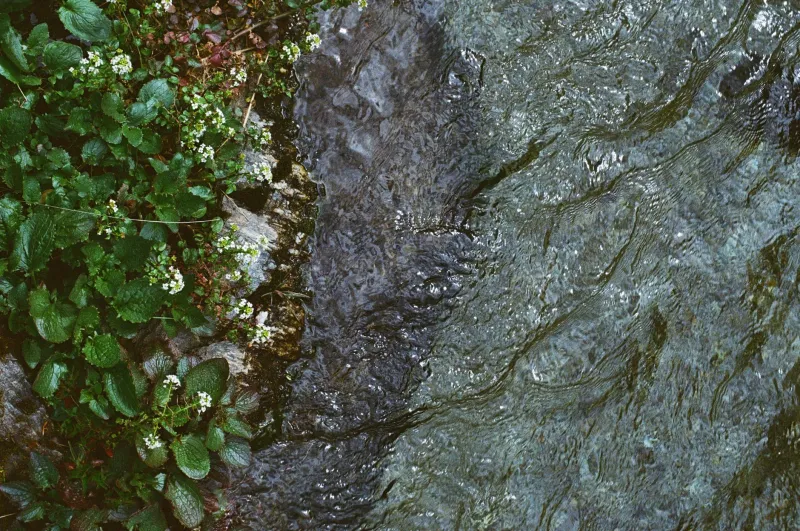
Your eyes are your first instrument. Healthy water has a certain clarity, a particular smell, a way of moving that tells a story before you even make a cast. Murky water after a rain is one thing. Murky water on a clear day in July is something else entirely.
Start paying attention to color. Green-tinted water in late summer might signal an algae bloom driven by nutrient runoff—fertilizer from upstream farms or lawns making its way into your favorite lake. Gray or milky water can indicate fine sediment disturbance, often tied to construction or eroded streambanks. Foam that lingers unnaturally along the banks sometimes points to surfactant contamination.
You don't need a lab to do basic water quality monitoring. Organizations like the EPA's Volunteer Monitoring Program and state-level watershed councils often offer free training and simple field kits that test for pH, dissolved oxygen, and nitrate levels. Dissolved oxygen, in particular, is a metric every serious angler should understand—fish need it to survive, and warm, stagnant, or nutrient-loaded water holds less of it. When DO levels crash, fish do too.
Keeping a simple log of conditions each time you fish—water temperature, clarity, flow level, weather in the days prior—builds a personal database that starts revealing patterns over months and years. That data is genuinely useful, and it's the kind of ground-level observation that professional biologists can't always replicate at scale.
Understand Fish Population Dynamics Well Enough to Worry About Them
Knowing that there used to be more fish here is one thing. Understanding why requires a working knowledge of how fish populations actually function. This isn't as intimidating as it sounds.
Every fishery has a carrying capacity—the number of fish a given body of water can sustainably support based on habitat quality, food availability, and spawning success. When that capacity drops, you'll often notice it in the size structure of what you're catching. Lots of small fish and very few large ones is a classic sign of recruitment overfishing or habitat degradation—the young fish are making it, but they're not growing to maturity. Conversely, catching only large fish with no juveniles in the mix can signal failed spawning, which might point to siltation on gravel beds or disrupted temperature cycles.
Pay attention to seasonal patterns. If the crappie spawn on your home lake is shifting earlier each spring, that's a water temperature signal worth noting. If the walleye run on your local river feels thinner than it did a decade ago, that's not nostalgia—it might be real, and it might be traceable.
State fish and wildlife agencies publish annual survey data for managed fisheries. Learning to read those reports—understanding what electrofishing surveys measure and what the numbers actually mean—gives you a baseline against which to compare your own observations. When your on-the-water experience diverges sharply from the official data, that's worth a phone call to your regional fisheries biologist.
Get Fluent in Invasive Species Before They Spread on Your Gear
Invasive species are one of the most urgent threats to freshwater ecosystems in the US, and anglers are—unintentionally—one of the primary vectors of spread. Zebra and quagga mussels. Northern snakehead. Asian carp. Hydrilla and Eurasian watermilfoil. Each of these has reshaped fisheries wherever it's taken hold, often irreversibly.
The skill here is identification. You need to know what these species look like, where they've already established, and what the high-risk behaviors are for spreading them. The US Geological Survey's Nonindigenous Aquatic Species database (nas.er.usgs.gov) is a free, searchable resource that maps confirmed sightings across the country. Make a habit of checking it for any new water you plan to fish.
The practical habits matter just as much as the knowledge. Clean, drain, and dry is the standard protocol—inspect your boat, trailer, and gear for plant fragments or hitchhiking mussels before you leave any water body. Let everything dry completely before your next trip. These steps feel minor until you understand what's at stake: a single boat trailer can introduce a population of zebra mussels to a pristine lake that's never seen them.
If you spot something unfamiliar—a fish species you don't recognize, an aquatic plant that seems out of place—report it. Most states have dedicated invasive species hotlines or apps. Your report can trigger a rapid response that might prevent a full-scale invasion.
Read Habitat the Way You Read Structure
Good anglers already do a version of habitat assessment—we look for structure, cover, depth changes, current seams. Watershed stewardship asks you to expand that lens and ask what's supposed to be here versus what is here.
Healthy riparian zones—the vegetation along streambanks—are critical for shade, bank stability, insect populations, and nutrient filtration. A stream that's lost its streamside trees is warmer, more erosion-prone, and less productive. When you notice that the willows and alders along your favorite stretch have been cleared or that the bank is crumbling into the channel, those are habitat red flags worth flagging to your local watershed council or soil and water conservation district.
Look at the streambed composition. Gravel beds are critical spawning habitat for trout, salmon, and many other species. When fine sediment smothers that gravel, spawning success collapses. Learning to distinguish a healthy gravel substrate from a silt-choked one is a skill that takes one afternoon to develop and a lifetime to appreciate.
The Angler as Citizen Scientist
Here's the honest truth about watershed stewardship: the people spending the most time on the water are often the first to notice when something goes wrong. Professional monitoring programs are underfunded and can't be everywhere. You can.
Programs like the Izaak Walton League's Save Our Streams, Trout Unlimited's network of local chapters, and American Rivers all rely on engaged volunteers who know their local waters intimately. Plugging into these networks turns your fishing habit into something with real conservation weight.
You don't have to choose between being a serious angler and being a serious conservationist. The skills feed each other. The more you understand your watershed, the better you'll fish it—and the harder you'll work to keep it worth fishing. That's the deal. That's the habit worth building.