Shared Water, Shared Responsibility: The New Rules of Angler Etiquette
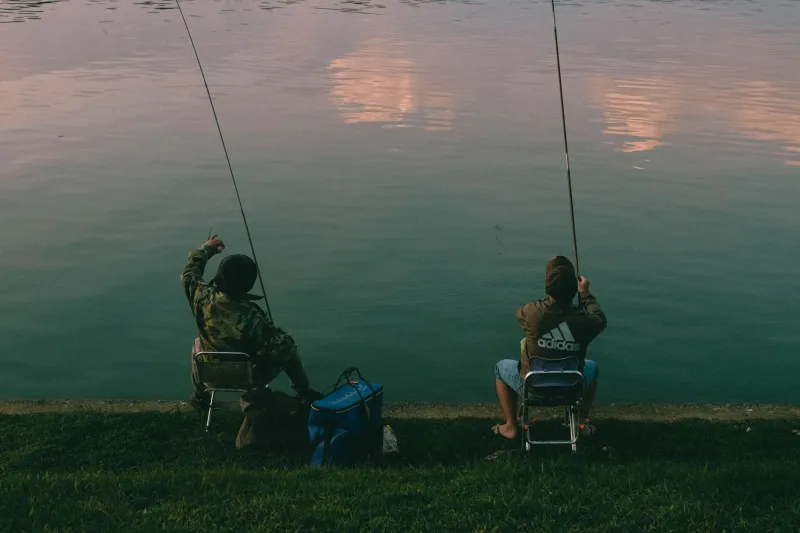
There's a stretch of tailwater in Tennessee that used to be a locals-only kind of secret. Word got out a few years back—a viral post, a YouTube video, the usual suspects—and now on a Saturday morning in October, you'll find anglers stacked shoulder to shoulder along the bank like a line at a concert. The fish are still there. The access, technically, is still public. But something intangible got lost in the crowd, and plenty of old-timers stopped going.
That story plays out on rivers, reservoirs, and coastal flats all across the country. More people are fishing than ever before—a trend that accelerated hard during the pandemic and hasn't fully reversed. That's genuinely good news for conservation funding, for tackle shops, for the culture. But it also puts real pressure on shared spaces, and it raises a question that doesn't get asked often enough: Are we actually behaving like we deserve the access we have?
Distance Is Respect
Let's start with the most basic principle, because it gets violated constantly: give people room.
On a big reservoir with a hundred miles of shoreline, crowding someone is a choice. On a small mountain creek where a single pool holds the only decent trout for a quarter mile, it's practically an act of aggression. The general guideline most experienced anglers follow is to stay at least a full cast's length away from anyone already working a stretch—and double that if the water is tight and technical.
Wading into someone's drift without asking is the fishing equivalent of cutting in line. It's not just rude; it disrupts their presentation, spooks fish they've been patiently working, and signals that your time matters more than theirs. On moving water especially, always approach from downstream and ask before you set up. That five-second conversation has defused more tension than you'd believe.
Boat Ramps and the Patience Problem
Few places in fishing culture generate more genuine hostility than the public boat ramp on a Saturday morning. And honestly, most of it is preventable.
Have your gear stowed, your plug in, your electronics on, and your trailer backed before you pull to the ramp. Don't rig rods at the dock. Don't idle there while your buddy runs back to the truck for a forgotten cooler. Load up quickly when you're done. These aren't obscure rules—they're basic courtesy that keeps the line moving and the mood civil.
The ramp is also where first impressions of anglers get made. Landowners, non-fishing park visitors, and local residents watch what happens there. Trash left behind, trucks blocking the lot, arguments over queue position—all of it feeds a narrative that anglers are inconsiderate users of public space. And that narrative has real consequences when access decisions get made by land managers or local governments.
The Spot Question
Here's where things get genuinely complicated: what do you owe other anglers when it comes to information?
The old ethic was simple—you don't give up a spot. Period. But fishing culture has shifted. Social media has made the idea of a truly secret location almost quaint. GPS coordinates get shared in Facebook groups. Drone footage reveals pools that took guides decades to find. The genie isn't going back in the bottle.
What you can control is your own behavior around information. Geo-tagging precise locations on public posts isn't just a breach of old-school courtesy—it can genuinely damage fisheries. A pool that can sustainably handle five anglers a week getting hammered by fifty is a conservation problem, not just a crowding problem. If you're posting catches online, consider pulling back the location data. Vague is fine. "Small stream in the Ozarks" tells a story without sending a crowd.
That said, hoarding information as a power move has its own problems. Mentoring newer anglers, sharing general knowledge about technique and habitat, and being generous with guidance on public forums builds the kind of fishing community that fights for access and habitat together. There's a difference between protecting a fragile spot and gatekeeping the sport.
Landowner Relations: The Access You Can Lose
A significant portion of the best fishing in the US runs through private land. Walk-in access programs, informal permission from farmers and ranchers, and handshake agreements between landowners and local anglers are responsible for more good fishing than most people realize—and they are fragile.
All it takes is one person leaving a gate open, one group driving across a crop field, one angler who didn't pack out their trash to end access for an entire community. Permanently. Landowners who've had bad experiences with anglers don't give second chances, and they talk to their neighbors.
If you fish private land—with permission—treat it like you own it. Better, actually. Leave it cleaner than you found it. Send a thank-you if you have contact info. Ask before you bring a friend. These habits aren't just polite; they're the reason the access exists at all.
Reading the Room on Crowded Public Water
Popular public spots—think the San Juan in New Mexico, the Au Sable in Michigan, or any Blue Ribbon trout stream within two hours of a major city—operate under a kind of social contract that most serious anglers understand intuitively but rarely articulate.
You don't leapfrog people working upstream. You don't set up camp in the middle of a run and fish it for six hours while others wait. You read the rhythm of the water and the people on it, and you find a way to share without diminishing anyone's experience. If a section is packed, maybe you drive another twenty minutes and find a less glamorous stretch. The fish are often better there anyway.
The flip side: don't be the person who acts like they own a public river. Crowded conditions are frustrating, but hostility toward other anglers—especially newer ones—poisons the culture. If someone is clearly learning, help them. If someone is clearly doing something that hurts the fishery, say something calmly and specifically. Tone matters.
Why This Is Actually a Conservation Issue
Here's the part that doesn't get said enough: etiquette and habitat are connected.
When anglers behave badly, access gets restricted. When access gets restricted, fewer people develop a stake in protecting the fishery. When fewer people care about the fishery, funding dries up, advocacy weakens, and the water suffers. The pipeline runs in both directions—a healthy fishing culture protects healthy water, and healthy water sustains a healthy fishing culture.
Being the kind of angler who gives space, respects private land, packs out trash, and treats other anglers like allies isn't just good manners. It's an act of conservation. Every time you model that behavior on the water, you're contributing to a culture that keeps these places fishable for the next generation.
The water doesn't belong to any one of us. Act accordingly.