Wire It In: The Brain Science Behind Building a Fishing Routine That Actually Lasts
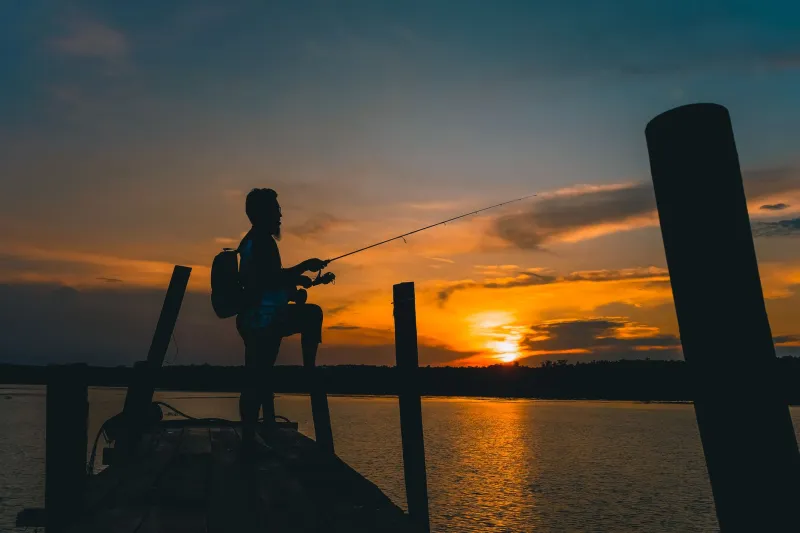
Every angler has said some version of it: I need to get out more. Maybe it's muttered on a Sunday night after another weekend swallowed by errands. Maybe it's the quiet frustration of realizing you haven't wet a line in six weeks. The intention is always there. The follow-through? That's the hard part.
Here's the thing—this isn't a motivation problem. It's a habit problem. And once you understand why habits form (or don't), you can stop fighting yourself and start building a fishing routine that runs almost on autopilot.
Why Your Brain Loves (and Hates) Routines
Neuroscientists describe habitual behavior as a loop with three components: a cue, a routine, and a reward. This framework, popularized by researcher Charles Duhigg, explains a lot about human behavior—including why some anglers are on the water every Saturday morning like clockwork while others own beautiful gear that mostly collects dust.
When a behavior gets repeated consistently in response to the same cue, the brain starts automating it. The decision-making load drops. You stop choosing to go fishing and you just... go. That's the goal. But it takes time and a little strategy to get there.
The challenge for fishing specifically is that it doesn't fit neatly into daily life the way a morning coffee or a gym visit might. It requires driving somewhere, gear prep, time blocks that stretch past an hour. That friction is real. The trick is reducing it—not by wishing it away, but by designing around it.
Stack It: Attaching Fishing to What You Already Do
One of the most effective techniques in behavioral science is called habit stacking—linking a new behavior to an existing one. The formula is simple: After I [current habit], I will [new habit].
For anglers, this might look like:
- After I make coffee on Saturday morning, I check the weather and water conditions for the week.
- After I fill up my gas tank on Friday, I also load the truck bed with my rod and tackle bag.
- After the kids' soccer practice on Sunday, I stop at the reservoir for 45 minutes on the way home.
Notice that none of these require a full fishing trip to work. The early stacks are about priming—building the mental and physical readiness so that when the right window opens, you're already halfway there. Gear that's pre-loaded doesn't need to be packed. A weather check that's already done doesn't require a decision.
Start small. Ludicrously small, if necessary. Habit researchers consistently find that tiny, friction-free actions build momentum faster than ambitious plans that collapse under their own weight.
The Friction Audit
Before you build anything, it helps to figure out what's actually stopping you. Grab a piece of paper—or just think it through—and list every obstacle that stands between you and your next fishing trip.
Common culprits look like:
- Gear is scattered and hard to grab quickly
- You don't have a spot dialed in, so decision fatigue kills the plan
- Your go-to water is a 45-minute drive and that feels like too much on a weekday
- You fish alone and scheduling around others feels complicated
- There's no clear "done" moment, so other obligations always win
Once you name the friction points, you can address them directly. Designate one bag that stays packed. Identify two or three spots within 20 minutes of your house that you know well enough to fish without overthinking it. Give yourself permission to count a one-hour trip as a real trip—because it is.
The goal isn't to eliminate all obstacles. It's to lower the activation energy enough that saying yes becomes easier than saying not today.
Make the Reward Feel Real
Habits don't stick without a satisfying reward loop—and here's where fishing has a genuine advantage. The sport is loaded with intrinsic rewards: the cast that lands perfectly, the first sign of a strike, the way light hits the water at 6 a.m., the specific quiet that doesn't exist anywhere else.
But early on, when you're still building the habit, those rewards might not show up every trip. That's normal. You can support the loop by creating your own micro-rewards:
- Keep a simple trip log—even just a note in your phone. Date, location, what you tried, what worked. The act of recording creates a small satisfaction signal and, over time, a record you'll actually enjoy looking back on.
- Give yourself something to look forward to at the end of a trip: a specific coffee stop, a podcast you only listen to while driving home from the water, a cold drink in the truck before you pull out of the lot.
- Share a photo or a note with a friend who fishes. Social accountability is one of the strongest habit reinforcers researchers have found—and it doesn't require a whole fishing crew, just one person who gets it.
When Life Blows Up Your Streak
It will happen. Work spikes. The kids get sick. A stretch of weather turns every local spot into a muddy mess. The habit loop gets interrupted, and suddenly three weeks have passed.
This is the moment most anglers mentally reset to zero and feel like they're starting over. Don't.
Research on habit recovery consistently shows that missing once has almost no impact on long-term habit strength—but missing twice in a row starts to erode the pattern. The most effective response to a broken streak isn't guilt or a grand comeback plan. It's the smallest possible re-entry: a 30-minute walk to a nearby pond, rigging up in the driveway, even just reading about a new technique or checking conditions for the weekend.
The cue-routine-reward loop doesn't care how epic your session is. It just needs to fire. Keep the chain alive, even with a tiny link.
Fishing as Identity, Not Just Activity
The deepest level of habit formation—the one that makes behaviors feel genuinely permanent—happens when the behavior becomes part of how you see yourself. Not I go fishing but I'm an angler. That identity shift changes how you make decisions, how you spend discretionary time, and how you talk about your weekends.
It also changes your relationship to the water and the fish themselves. Anglers who show up consistently tend to notice more—changes in a creek's flow, the return of a species after a tough year, the slow recovery of a stretch of habitat. That awareness deepens the reward, which reinforces the habit, which brings you back again.
At Fish Habit Outfitters, we've always believed that fishing isn't really a hobby. It's a practice—one that rewards consistency, punishes nothing, and gives back more the longer you stick with it.
You don't have to overhaul your schedule. You just have to wire it in.