What's in Your Tackle Box Says More About You Than You Think
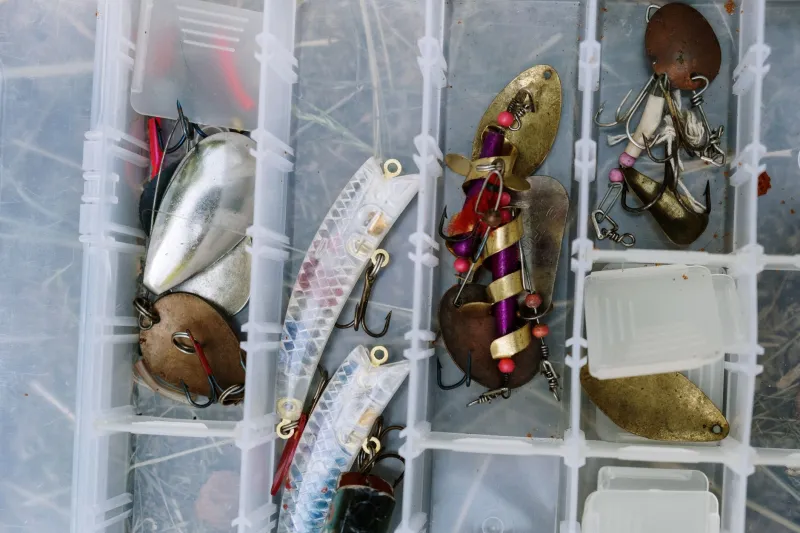
There's a moment most anglers know well. You're standing at the edge of your gear corner — maybe it's a dedicated room, maybe it's just a corner of the garage — and you're making small decisions before the sun's even up. Which rod. Which reel. Fluorocarbon or braid. Lead sinkers or tungsten. That moment is more loaded than it looks.
Your gear choices don't just shape your fishing experience. Over time, they quietly shape you — specifically, how deeply you connect to the idea that fishing and conservation are the same habit, not two separate ones.
The Psychology Behind Equipment and Identity
Behavioral scientists have spent decades studying how the objects we own reinforce our self-perception. It's called the "extended self" concept — the idea that our possessions become part of how we define who we are. Anglers are no exception.
When you buy a rod built by a company that donates a portion of revenue to Trout Unlimited, you don't just own a fishing tool. You carry a small piece of that mission every time you pick it up. When you swap out your old lead jig heads for non-toxic alternatives, something subtle shifts. You start noticing water clarity more. You start thinking about what's living in the sediment below your feet. The gear becomes a physical cue — a daily reminder of values you've decided to stand behind.
Psychologists call this kind of reinforcement a "habit loop." A cue triggers a routine, the routine produces a reward, and the reward strengthens the behavior. In fishing terms: you grab the sustainable gear (cue), you fish intentionally (routine), you feel good about the day on the water (reward). Repeat that loop enough times, and it stops feeling like a conscious choice. It becomes who you are.
From Casual Angler to Committed Steward — One Purchase at a Time
Nobody becomes a conservation-minded angler all at once. It's incremental. It usually starts with something small — maybe you read a label on a pack of soft plastics and noticed the phrase "lead-free" for the first time. Or a buddy mentioned that monofilament line takes 600 years to break down and you couldn't quite shake that number.
Those small moments of awareness are the entry points. And here's the thing: they tend to stick when they're attached to a purchase, because purchases create physical reminders. The spool of braided line sitting on your shelf doesn't let you forget what you learned. Your waders made from recycled materials are a tactile connection to a decision you made with intention.
This is why gear selection matters beyond the purely practical. Every deliberate choice you make — every time you pick durability over disposability, or spend a little more for a manufacturer with a genuine conservation track record — you're reinforcing a version of yourself that cares about what's downstream.
The Trap of Gear Accumulation vs. Gear Intention
Let's be honest: fishing culture in America has a complicated relationship with stuff. Tackle shops are temples. Bass Pro and Cabela's are cathedrals. There's real joy in new gear, and nobody's here to shame that.
But there's a meaningful difference between accumulating gear and choosing gear with intention. Accumulation is reactive — you buy what's on sale, what's trending on YouTube, what the guy three boats down is using. Intentional selection is slower. You ask questions. Who made this? What's it made of? What happens to it when it breaks? Does this company put money back into fisheries or just take from them?
Intentional gear selection doesn't mean you spend more. Sometimes it means buying less, but buying better. A quality rod that lasts fifteen years is a conservation act compared to cycling through cheaper versions that end up in landfills. Tungsten weights cost more upfront but eliminate the slow-motion ecological damage that lead deposits in riverbeds. Recycled or responsibly sourced waders cost a bit more today but signal to manufacturers that the market rewards doing the right thing.
The Gear That Keeps Reminding You
Here's what's quietly powerful about aligning your equipment with your values: the gear keeps showing up. You can't leave your principles at home — they're literally strapped to your back, in your hand, or clipped to your vest.
That fly box with the barbless hooks? Every time you open it, you're reminded that you made a choice about fish welfare. The net with the rubber mesh that protects fish slime coats? It's in your hands on every single catch. The biodegradable fishing line? You feel it every cast. These aren't abstract commitments written in a journal. They're embedded in your routine.
Over time, that consistency does something remarkable. It closes the gap between "someone who fishes" and "someone who protects what they fish in." The identity solidifies. And once it solidifies, it tends to expand — into advocacy, into volunteering, into passing the habit along to whoever's learning to fish beside you.
Building Your Conservation Gear Kit
If you're thinking about being more intentional with your next few purchases, here are some practical starting points:
- Switch to non-toxic weights. Tungsten, bismuth, and tin-based options are widely available now and perform comparably to lead in most applications.
- Look for conservation partnerships. Some manufacturers donate to groups like the American Fisheries Society, Trout Unlimited, or state-level habitat restoration programs. That's worth knowing before you buy.
- Prioritize durability. A well-made rod, reel, or pair of waders that lasts a decade beats three cheaper versions that don't. Less waste, more connection to the gear you own.
- Choose rubber-mesh landing nets. Better for fish, full stop. It's one of the easiest swaps you can make.
- Pay attention to line. Monofilament is the most commonly found fishing debris in US waterways. If you're fishing situations where braid or fluorocarbon works, consider making the switch. And always, always pack out any line you cut.
The Habit That Outlasts the Season
Fishing habits are some of the stickiest habits humans form. Ask anyone who grew up fishing with a parent or grandparent — the memories aren't just about fish. They're about the feel of the rod, the smell of the tackle box, the ritual of rigging up in the dark.
That stickiness is exactly why gear choices matter so much. The objects woven into those rituals carry meaning that outlasts any single fishing trip. When those objects are chosen with care — when they reflect a genuine commitment to the waters that make this all possible — the ritual becomes something bigger than recreation.
It becomes stewardship. And stewardship, once it's a habit, doesn't really turn off.
So next time you're standing in front of your gear before a morning on the water, take a second. You're not just packing for a fishing trip. You're reinforcing who you are as an angler — and who you want to be for the water you love.